
Solar radio bursts and their fine spectral structures contain key physical information related to plasma instabilities, high-energy particle acceleration, and other important processes. They therefore serve as an important observational means for studying solar activity and space weather. With the increasing volume of solar radio spectrogram observation data, deep learning-based recognition and detection of solar radio bursts have become a key research direction. However, most studies on meter-wave solar radio spectrogram recognition and detection rely on proprietary datasets, and publicly available datasets remain scarce. To address this issue and facilitate the use of public datasets for deep learning model validation, thereby promoting the development of automatic detection methods for meter-wave solar radio spectrogram, we propose a new solar radio spectrogram dataset. In our study, we further investigate the dataset construction process, its usage, and the training performance achieved based on this dataset.
The dataset is publicly available at: http://62.234.23.17/SRData/SRSD/.
This study constructs a public dataset based on Learmonth Observatory in Australia and the meter-wavelength observing system of the Chashan Solar radio Observatory (CSO) of Shandong University. To meet the needs of different researchers, we divide the dataset into three parts. The first is the solar radio spectrogram dataset A (SRSD-A), which is designed for the automatic classification and identification of spectrogram observation data into three categories: burst, non-burst, and abnormal data. 。The second is the solar radio burst dataset B (SRBDB-B), which can be used for the localization and detection of five types of meter-wave solar radio bursts, namely type II, type III, type IIIs, type IV, and type V bursts. The third is the solar radio burst dataset C (SRBD-C), which is intended for the localization and detection of three types of solar radio bursts: type II, type III, and type IIIs. Based on the above datasets, multiple deep learning models are trained to verify their effectiveness. The trained models can be applied to the recognition and detection of solar radio spectrograms. Figure 1 shows the YOLO11 network model.
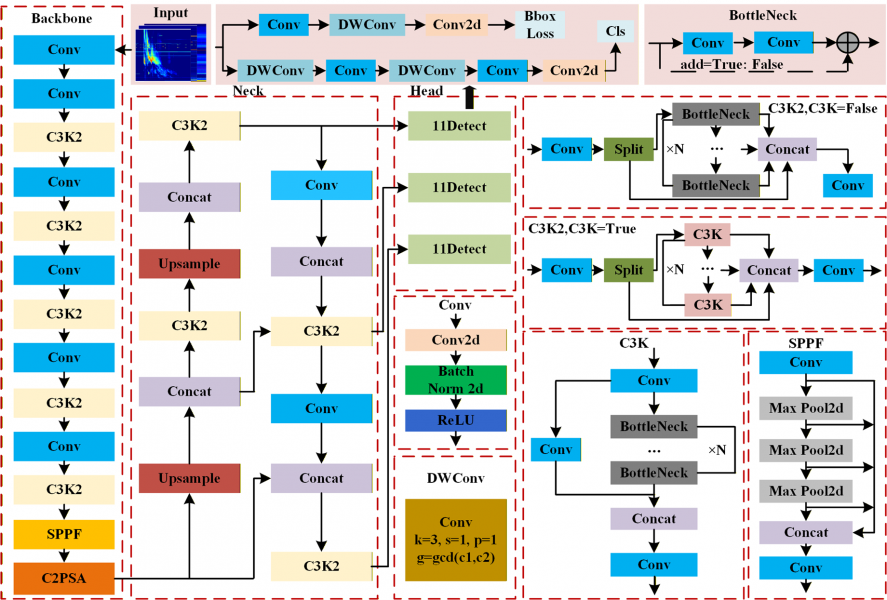
Figure 1: Schematic diagram of the YOLO11 model architecture.
We validated Dataset A using multiple deep learning architectures, including ResNet, ConvNeXt, and MobileViT. The classification accuracy exceeded 99%, demonstrating excellent classification performance. Based on the burst detection datasets, we trained the YOLO11 model on Dataset B and Dataset C. Figure 2 shows the training process for Dataset B. As can be seen from the figure, the overall training process was relatively stable. In addition, the trained model was validated on a more complex dataset, achieving a precision of 0.702 and a recall of 0.645, which demonstrates its good generalization capability. However, some misclassified samples still remain. Noise in the spectrograms and the complexity of burst morphologies are still challenges that need to be addressed. Increasing the amount of data would help further improve the training accuracy.
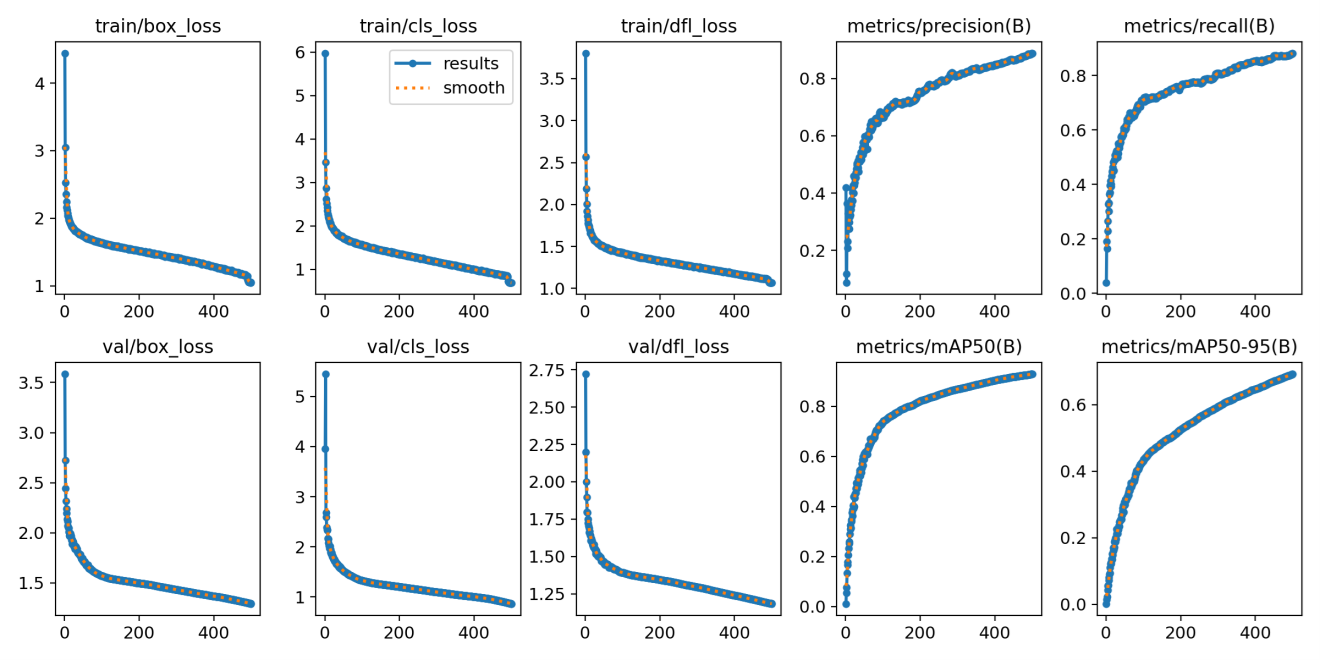
Figure 2: YOLO11 model training performance in Dataset-B
Conclusion
The results show that the dataset proposed in this study can effectively support the recognition and detection of solar radio observational data. This provides a unified dataset for experimental research on solar radio burst detection, thereby supporting studies on solar radio data processing and burst detection, while also promoting the integration of radio astronomy and artificial intelligence. In future work, we plan to further optimize and expand the dataset by incorporating additional data sources, while also improving the objectivity of the annotation process and enhancing the applicability of the dataset. These datasets are expected to improve the detection capability for future burst events and advance related research.
Based on a recently published article: Yan Liu , Hongqiang Song , Fabao Yan and Yanrui Su, Dataset for Recognition and Detection Based on Solar Radio Spectrogram Data, Research in Astronomy and Astrophysics,26:037001 (2026), DOI: https://doi.org/10.1088/1674-4527/ae2b5a