Research undertaken with Craig Stark (research student), and Profs E W Laing and A A da Costa, IST Lisbon.
Pair plasmas (electron-positron plasmas) are fundamentally unstable to oscillation, since the positive and negative ions have identical mobility: this means there is no stable ion background against which electrons can move (as is the case in a conventional plasma).
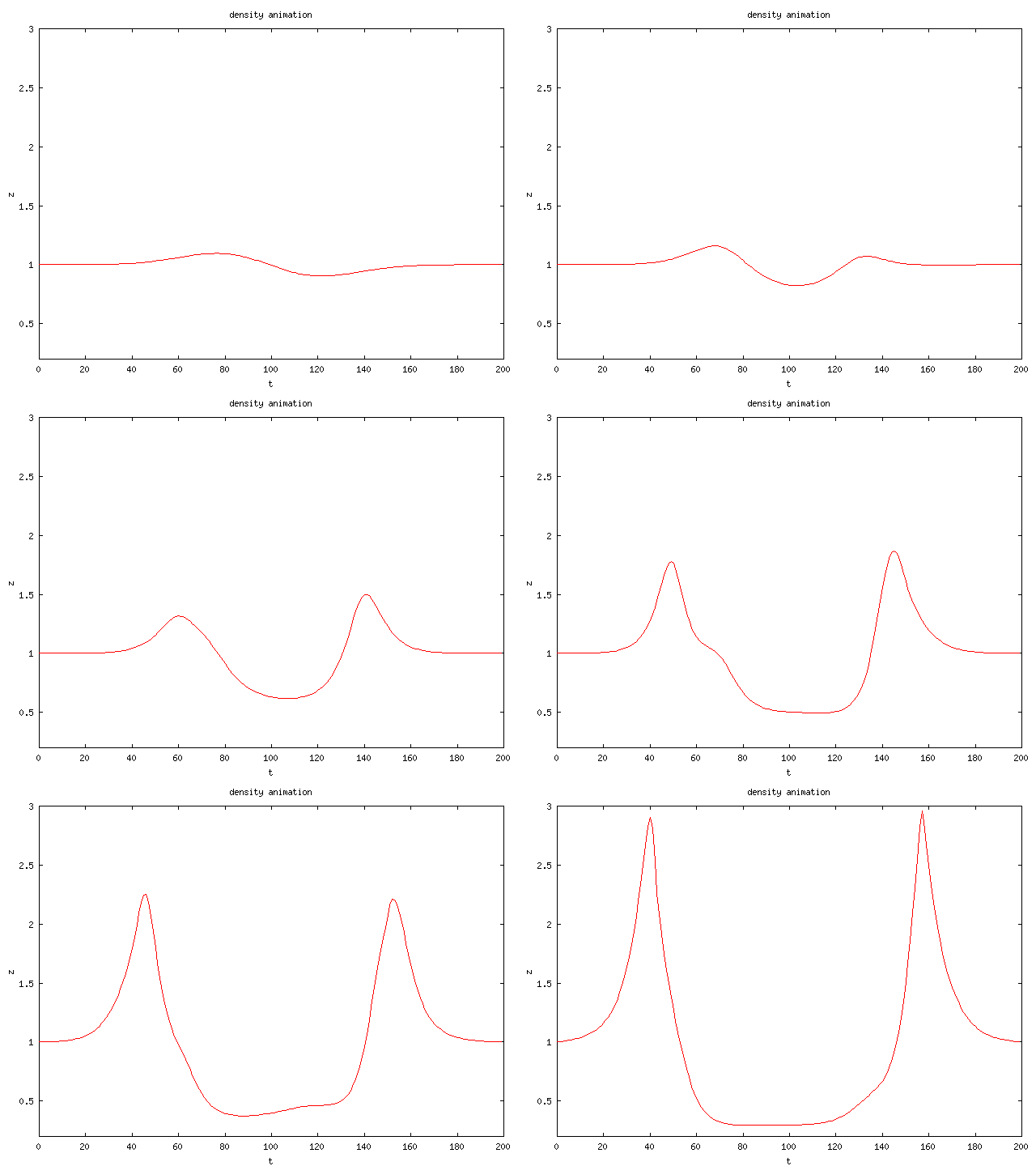
Such oscillations can be important in the pulsar context, since here the magnetosphere is composed of pair plasma. Oscillations can be induced by stochastic radiation of particles causing local density fluctuations as the particle recoils. The electric field in the oscillations can be as large as the field in the laboratory frame. Below are animated gif files showing the evolution of electric field and positron density for an unmagnetised pair plasma. Essentially the density evolution changes the local plasma frequency at the centre, causing the electric field to get out of phase, and resulting in density pile-up at the edges.
Latest publication can be found at the following link: Stark et al 2007
Below are animations of the unstable oscillation
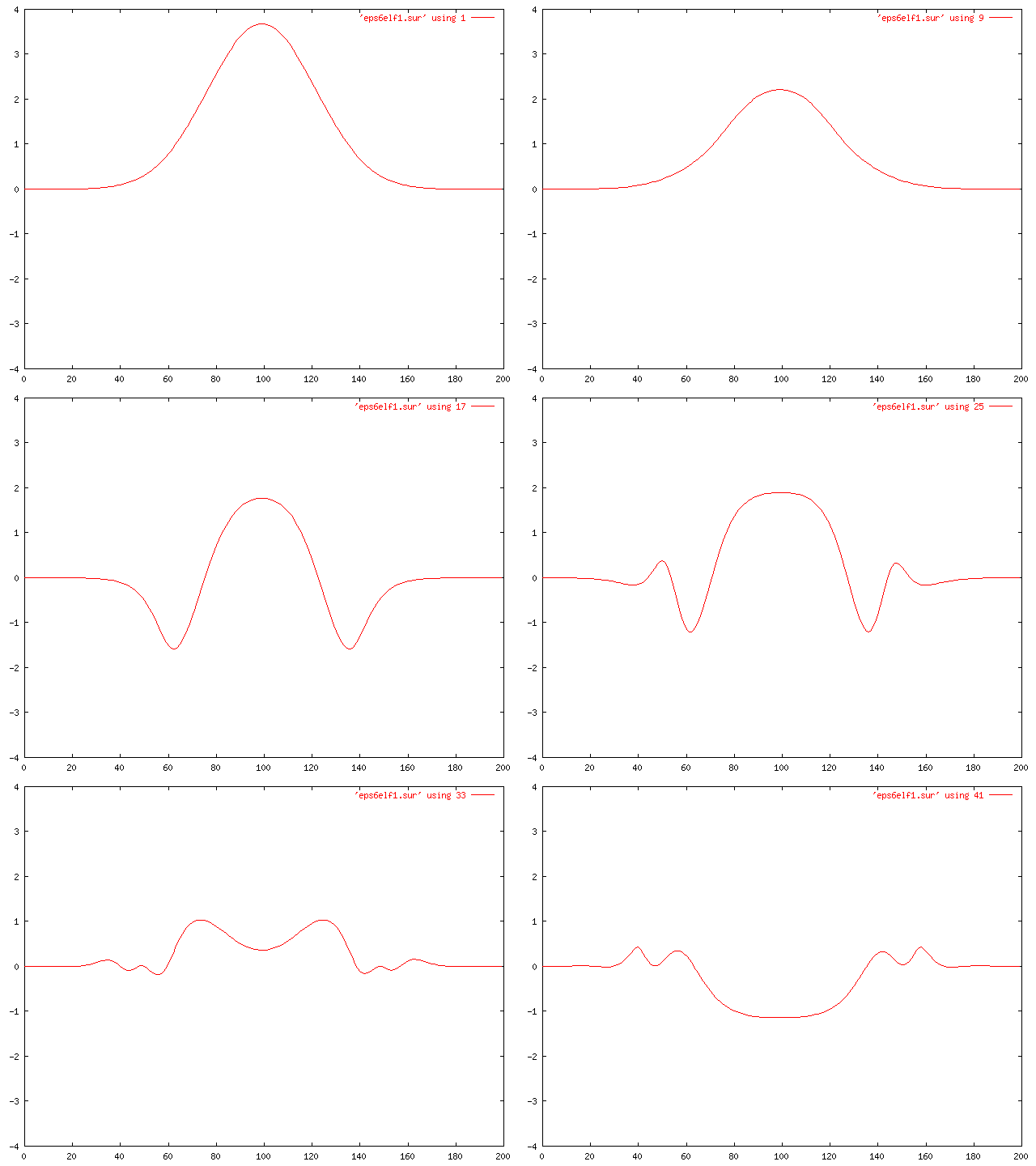
The magnetised case shows how in an inhomogeneous field gradient, the electrostatic oscillation may be coupled to the plasma electromagnetic mode, in such a way that the unstable oscillation loses energy by radiative damping, and therefore acts as a seat of coherent radiation. Below is another animated gif showing (in cylindrical geometry) the evolution of the azimuthal electric field, driven by a plasma oscillation in the radial direction with an axial inhomogeneous magnetic field. The radiation of an e-m wave is clear.